Every kitchen table is a classroom.
The kitchen table is the most powerful entrepreneurial classroom available to any child — in any country, in any language.
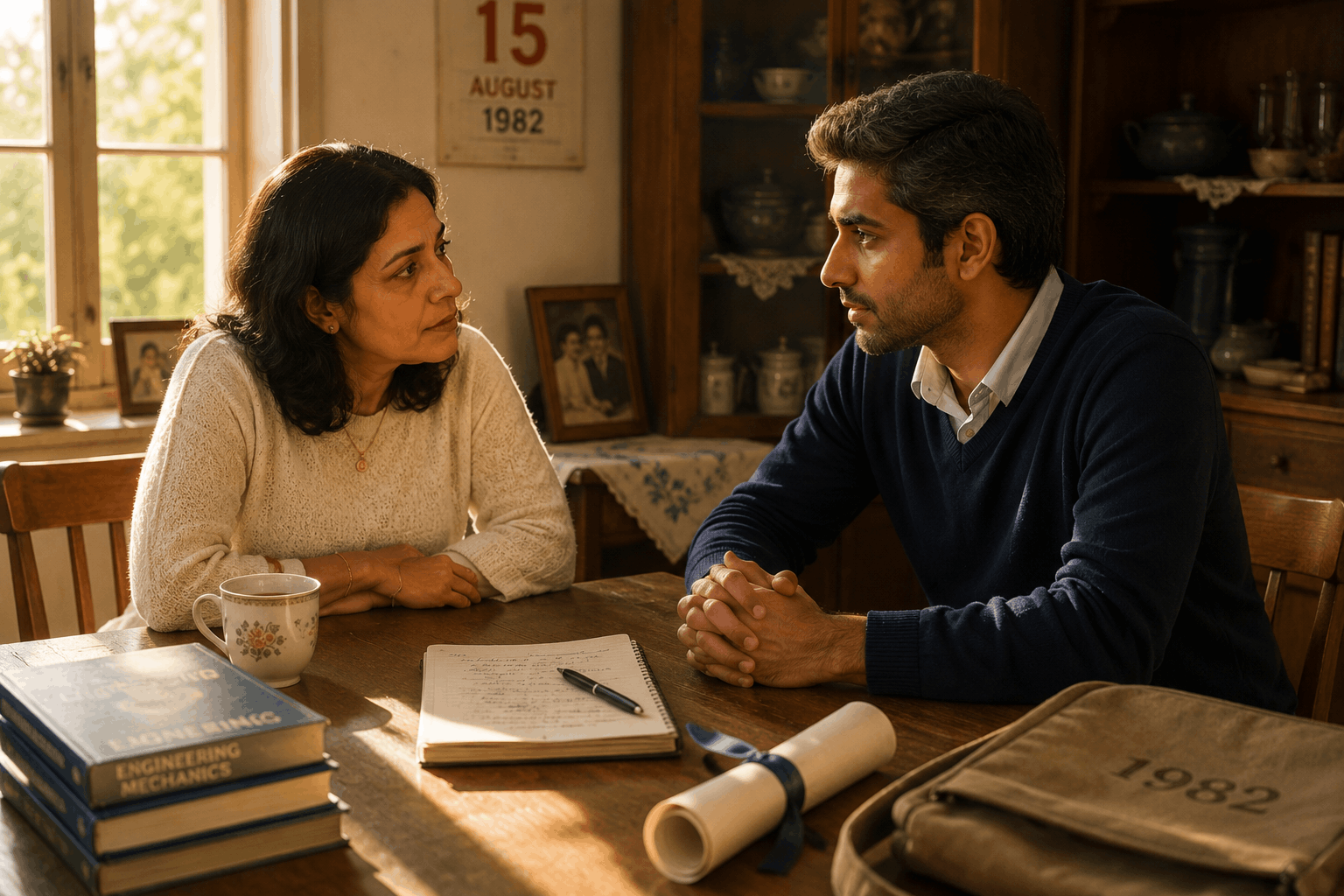
On August 15, 1982 — India's 35th Independence Anniversary — Vishnu Shanker came home having just completed his engineering degree. His mother asked one question:
"Do you have a job?"
He told her the truth. He had a plan to start a business. She told him, with all the love a mother has for a child she has watched grow, that it would be safer to take employment with an established company.
That conversation — between a parent's love and a child's entrepreneurial nature — is the one this entire program is built around. Not because the mother was wrong. Because something needed to exist that would make both possible at once.
The work was completed on July 4, 2026 — America's 250th Independence Anniversary. Both dates celebrate the same human idea: the capacity to look at what exists and decide to build something better.
That idea belongs to no single country. It belongs to anyone willing to sit down at a kitchen table and begin.

Vishnu Shanker spent forty years building entrepreneurial ventures in America and working with the international business community across many countries.
His parents — Sarala and Anand — were the original inspiration. Sarala invented ginger ale in India in 1969 before anyone around her knew what it was.
Anand built a sand bath for pound cakes because there was no oven. Neither of them ever started a company. Both were entrepreneurs in every way that matters.

Nivedita Shanker is the co-founder of SimpleJoy | SaralAnand and the reason the work exists.
For thirty-eight years she managed the financial and administrative foundation of the family and the business while raising two children and supporting the creation of the program.
The belief that the family is the most important entrepreneurial unit is something she did not simply advocate—it is something she lived every day for over two decades.
The ideas behind SimpleJoy | SaralAnand are simple, practical, and universal. They are built around the conversations every family can have.
The kitchen table is the most powerful entrepreneurial classroom available to any child — in any country, in any language.
It is absorbed from the people around you, the conversations you grow up in, and the examples you see every day.
The right weekly conversation builds the mindset, confidence, creativity, and resilience that classrooms alone cannot provide.
Not only to Indian families. Not only to entrepreneurs. To every parent raising a curious child, anywhere in the world.
"Entrepreneurs are not born. They are ingrained, nurtured, and raised."

Any parent, grandparent, or trusted adult raising a child between 8 and 18. In any country. At any income level. In any language.
A kitchen table. A child who arrived curious. And the willingness to ask one simple question tonight:
"What did you notice today?"
The animated children's series brings together young dreamers from sixteen different countries, showing that curiosity, creativity, and entrepreneurship belong to every culture.
Every child begins at a different place. Every family tells a different story. But every meaningful journey begins with a conversation around a kitchen table.
Because the kitchen table is universal.
And so is the question.

You don't need a business plan. You don't need experience. You don't need the perfect time. Just a kitchen table, a curious child, and one question tonight.
"What did you notice today?"